
No options in this view.
No options in this view.
 This product has multiple variants. The options may be chosen on the product page
-
This product has multiple variants. The options may be chosen on the product page
Bicycle pedals - the foundation of efficiency and riding comfort
The pedals are one of the most important and most used parts of a bicycle, as they transfer the power from your feet to the bike. The choice of pedals is not just a technical decision, it has a major impact on riding comfort, efficiency and bike control. Whether you're a commuter, road cyclist or mountain biker, the right pedals can improve your riding experience.
Why are pedals an important part of a bike?
Pedals are more than just power transmitters - they affect a cyclist's ergonomics, safety and performance. The type of pedal determines how well you can control the bike, which shoes you can ride in and how efficiently energy is converted into motion.
When choosing pedals, pay attention to the following:
- Bike type and riding style - A road cyclist needs different pedals from a mountain or urban cyclist.
- Practicality and comfort - Comfort and ease of use are important in everyday cycling.
- Security and management - Locking pedals improve control on challenging trails, while flat pedals are perfect for a relaxed ride.
- Durability and maintenance - The durability and maintainability of the pedals contribute to their long life.
The different types of kneelers and their areas of use
1. Balance pedals - A versatile and effortless choice
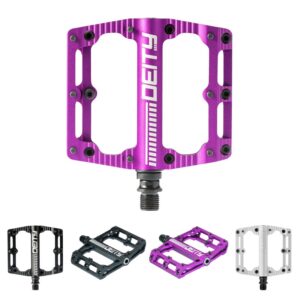
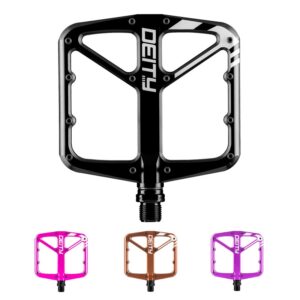
Flat pedals are simple and easy to use pedals that can be worn with regular shoes. They are particularly suitable for urban cycling, touring and casual riding. Flat pedals are often equipped with reflectors and a gripping surface for increased safety.
- Benefits: Easy to use, suitable for all shoes.
- Uses: City cycling, commuting, excursions.
- Points to note: Not as efficient a power transmission as a locking pedal.
2. Locking pedals - Maximum power and control
Locking pedals are particularly popular for road, gravel road and mountain biking. They attach to bicycle shoes for more efficient pedalling and improved bike control, especially when riding at high speeds or in technical conditions.
- Benefits: Excellent power transmission, better control and balance.
- Uses: Road cycling, off-road cycling, gravel cycling.
- Points to note: Requires special shoes and training.
3. Combi-pedals - Versatile use for different drives
Combination pedals combine the best of flat and lock pedals. On one side is a traditional flat for regular shoes, while the other side has a lock mechanism for attaching driving shoes. This makes the combination pedals an excellent choice for cyclists who ride in a variety of environments.
- Benefits: Versatile, suitable for different driving situations.
- Uses: Gravel cycling, off-road cycling, mountain biking.
- Points to note: May be slightly heavier than specialised pedals.
4. Off-road tyres - Durability and grip for demanding conditions
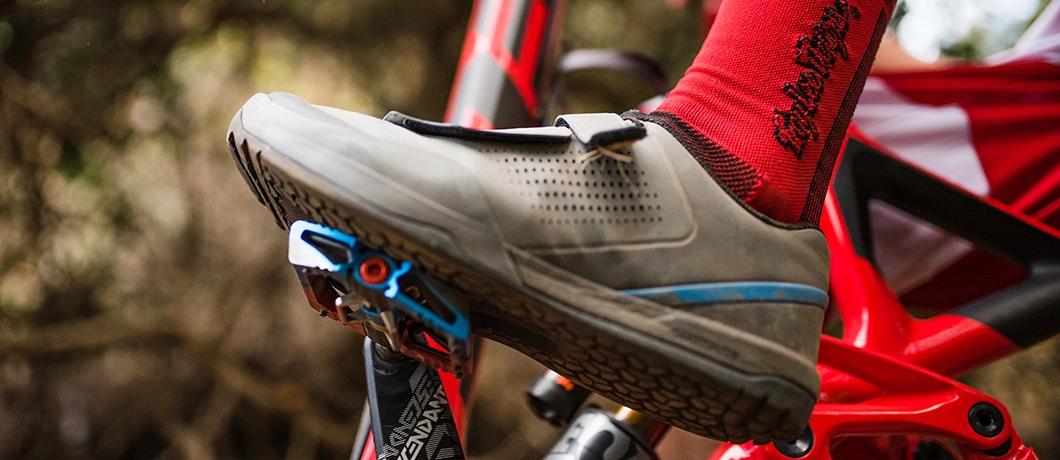
Mountain biking pedals are designed to withstand demanding terrain such as mud, rocks and impacts. They offer good grip and an open design that prevents mud from building up on the pedal. They provide stability for technical riding.
- Benefits: Durable and grippy, with good control on difficult routes.
- Uses: Mountain biking, enduro, downhill.
- Points to note: It can be heavy and it takes practice to remove the shoes.
5. City bike pedals - Practical comfort and visibility
Pedals for city bikes are designed for comfort and practicality. They are often fitted with reflectors to increase visibility in traffic. Their surface provides grip, which prevents feet from slipping.
- Benefits: Convenient, comfortable and safe for everyday use.
- Uses: City cycling, commuting, everyday use.
- Points to note: Not suitable for challenging off-road driving or hard racing.
Pedal maintenance and servicing - Extend the life of your pedals
Pedals are one of the most wearable parts of a bike, and regular maintenance will extend their life and improve your riding experience.
Main maintenance operations:
- Checking the bearings - The bearings inside the pedals wear out over time and can start to snap or spin badly. Checking and lubricating will extend their life.
- Cleaning - Clean mud, sand and other dirt from your pedals regularly.
- Tightening - Make sure the pedals are firmly attached to the crank.
Properly selected and maintained pedals improve your riding experience and make cycling more enjoyable and safer.