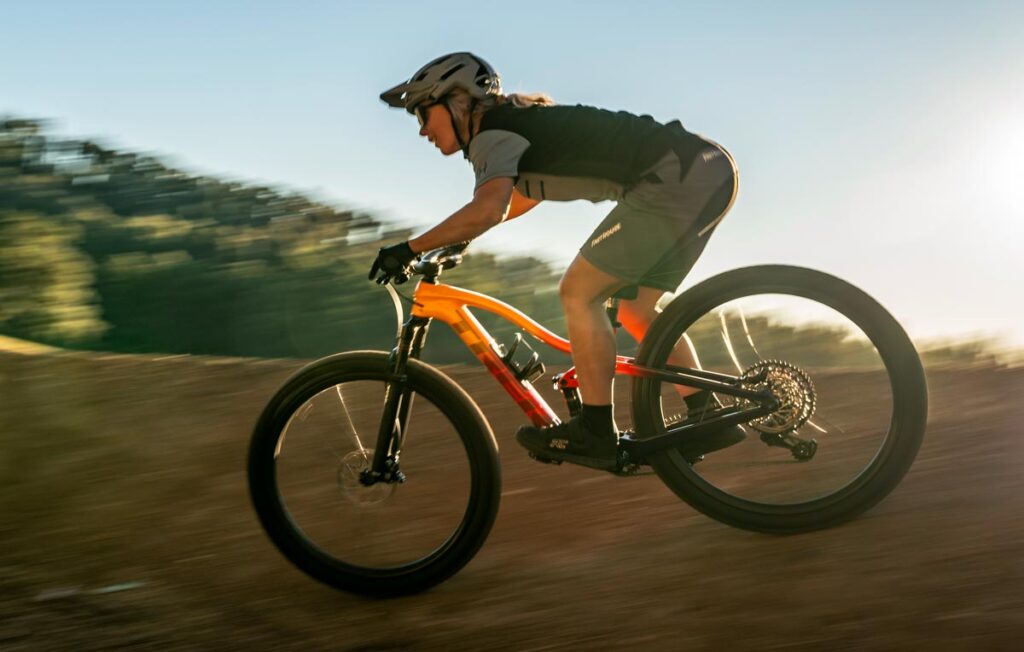
A mountain bike works by combining specialised components designed to withstand demanding terrain. Switching system provides the right amount of resistance for a variety of climbs and descents, the suspension absorbs shocks and vibrations, the special tyres provide grip on slippery surfaces, and the strong frame can withstand tough conditions. These components work together to create a bike that's perfect for riding over trails, rocks and roots. Check out VMSport's quality mountain bike range and find the model that suits you!
How do mountain bike gears work and why do you need them?
The mountain bike gear system changes the resistance to pedalling by shifting the chain between sprockets of different sizes. Smaller strollers make it easier to pedal on steep climbs, while the larger wheels allow you to move faster on flat terrain. The system consists of a front derailleur, rear derailleur and gear levers that guide the chain into the right position.
Modern mountain bikes often use a 1x gearing system, with only one front wheel and a wide rear pack. This simplifies changing and reduces the need for maintenance. There can be 10 to 12 wheels on the rear, providing enough variety for different terrain conditions.
Adjusting the gearbox is important for smooth operation. The gears should be adjusted so that the chain moves smoothly between the wheels without snapping or jumping. Regular maintenance and wire rope tensioning will keep the gears in working order for longer.
How does the suspension of a mountain bike affect the riding experience?
Suspension absorbs shocks and shocks caused by uneven terrain. Front suspension (at the front) improves steering feel and grip, while rear suspension increases comfort and keeps the rear tyre in contact with the ground. Together, they allow for faster and more controlled driving over demanding terrain.
The front suspension (hardtail) bike is suitable for most mountain bikers and offers a good balance between performance and comfort. A full suspension bike is a better choice for technical riding and long rides where comfort is important.
Suspension adjustment options vary from model to model. The basic settings are suspension travel (usually 100-160 mm), hardness and rate of return. The correct adjustment depends on the rider's weight, riding style and terrain. Too soft a suspension takes power away from pedalling, while too hard does not absorb shocks enough. See VMSport's range of suspension mountain bikes and find the suspension solution that's right for you!
What makes mountain bike tyres and brakes special?
Mountain bike tyres are wider and have a deeper groove. illustration, which provides grip on loose soil, mud and stones. Low air pressure (1.5-2.5 bar) increases the contact patch and improves grip, but also increases rolling resistance. Tyre size affects the feel: 27.5-inch tyres are nimble, while 29-inch tyres roll better over obstacles.
Disc brakes are standard equipment on mountain bikes because of their efficiency and reliability. They work well in wet and dirty conditions, unlike rim brakes. Hydraulic disc brakes offer better feel and less maintenance than mechanical versions.
Brake size affects braking performance: larger discs (180-200 mm) give more power but weigh slightly more. Brake pads wear out in use and require regular replacement. Good brakes give the rider the confidence to descend steeper hills in a controlled manner.
How does a mountain bike frame stand up to tough conditions?
The mountain bike frame is built withstand shocks and the strain of uneven terrain. Aluminium is the most common frame material due to its lightness, durability and reasonable cost. Carbon fibre is lighter and better at absorbing vibrations, but is more expensive. Steel offers a comfortable ride and is very resistant to bumps.
The geometry of the chassis has a significant influence on the driving feel. A longer wheelbase makes the bike more stable when riding fast, while a shorter wheelbase improves agility. A looser steering angle is suitable for descents, while a steeper angle makes the bike more agile for climbs.
Reinforcements in critical areas of the hull, such as the stern tube and centre joints, prevent cracking and bending. A quality frame can withstand years of intensive use with regular maintenance and protection against corrosion. The correct frame size ensures a comfortable riding position and efficient transmission from pedals to wheels. Find a durable and quality mountain bike at VMSport for your next off-road adventure!